Nothing is so fatiguing as the eternal hanging on of an uncompleted task. ~William James
Showing posts with label organization. Show all posts

Monday, January 23, 2012

Done for the Week: Out of Time and Out of Focus

I am desperately seeking routine.  In particular, one that will support/permit the blogging productivity (two to three posts per week) that I aspire to. 

Once again, I have fallen short. 

Here's why, in part:

Done for the Week:  Jan. 16-22, 2012
  1. Made appointment with orthopedist to deal with foot injury
  2. Biked once, and did weight training--foot injury prevented additional dry-land exercise; did hip-strengthening exercises twice
  3. Watched two basketball games with various family members
  4. Continued reading Elizabeth George's A Traitor to Memory aloud with my husband--almost finished
  5. Read Smokin' Seventeen by Janet Evanovich; am in the middle of "The Adventures of Sherlock Holmes" in The Complete Stories of Sherlock Holmes, by Arthur Conan Doyle, and The House by the Sea:  A Journal, by May Sarton 
  6. Continued to work my two part-time jobs, putting in extra hours
  7. Published 1 blog post
  8. Continued work on current clients' projects
  9. Attended training and was sworn in as deputy voter registrar
  10. Attended new church as visitor
  11. Attended 1 yoga class
  12. Did laundry 
  13. Continued to support my son in his search for an internship
  14. Had lunch and breakfast dates with my husband
  15. Negotiated dishwasher repair appointment and customer relations deal; ongoing. . .
  16. Shopped for final family Christmas celebration
  17. Hosted final family Christmas celebration 
  18. Paid the monthly bills
  19. Meditated 3 times
  20. Continued major decluttering, getting rid of approximately ten years of old bills and financial reports
  21. Straightened, vacuumed and dusted living room
The most important thing I accomplished last week was the continuation of our household effort, mostly "womaned" by me, to dig out from the accretion of "the childrearing years."  I am entering a phase still short of "Maintenance", but beginning to be able to see more and more of the floor space in my ranch-style, full- (and fully occupied) basement house.  And lo and behold, we have closets!  And drawers!  And shelves and countertops!  I'm really counting on Gretchen Rubin's Happiness Project promise that "outer order [will] contribute to inner calm."  If I continue at my current pace of outer "ordering," I should be comatose soon.

My goal for last week was to focus on walking; non-weight-bearing hip strengthening exercises; and swimming--and to make it to the gym three times. I can't say the week's effort was a smashing success in this realm.  As item 1 above reveals, I made it to the gym only one time, though I did manage to combine biking with weight-training.  I continue to have a hard time making myself swim.  Arctic temperatures, my hair-washing schedule, and a crazy round of appointments and activities provided a barrier sufficient to discourage my mild aquatic interest.  And despite my dog's encouragement (in the form of whining, and stealing pillows--his protest-of-choice), I didn't walk at all--other than from one job to another, and one room to another in search of sweets.  I did squeeze in a couple of hip exercise sessions, in addition to the one yoga class that wasn't preempted by an expanding work schedule.  But clearly, I could have done better. 

I had also planned to find more time for this blog last week.  Unfortunately, the universe seems determined to eat the time slots previously reserved for posting.  I'm not sure how this is going to shake out in future, as my work schedule and young-man-launching activities and obligations are growing like Topsy just now.  I am particularly challenged by an erratic schedule, which changes from day to day, week to week, and semester to semester. 

My focus goal for this coming week is to schedule three exercise sessions, three meditation sessions, and publishing of two blog posts (in addition to this one); and to stick to the schedule as circumstances permit, and re-work it, as they demand.

Wish me luck.  I don't seem to be especially good at "pre-meditated" work. (Pardon the pun, which I confess was intended.)

Sunday, January 15, 2012

Done for the Week: In the Nick of Time

Clearly, today is not Monday.  Not by a long shot.  In fact, it's very nearly next Monday.  2012 is shaping up to be a very busy year.   

Put it to Bed is now in its official third year, and much work remains on my personal reorganization project.  I am in the process of reassessing the structure of this blog, given the numerous enterprises in which I am engaged.  In the meantime, I intend to continue posting two to three times weekly--generally beginning with Monday's "Done for the Week" accountability exercise.

For this (nearly gone) week, in case you've been waiting breathlessly to read this update, you can breathe again.  Here's the list!

Done for the Week:  Jan. 2-8, 2012
  1. Biked once, ran once, walked twice
  2. Watched three basketball games with various family members
  3. Took my dog to the dog park with my husband, and on one long walk 
  4. Continued reading Elizabeth George's A Traitor to Memory aloud with my husband--only a few chapters left
  5. Read "A Study in Scarlet" and "The Sign of the Four" from The Complete Stories of Sherlock Holmes, by Arthur Conan Doyle
  6. Continued to work my two part-time jobs
  7. Published 1 blog post
  8. Continued work on current clients' projects
  9. Spent 6 hours working on recall campaign
  10. Attended 2 yoga classes
  11. Did laundry 
  12. Meditated 5 times
  13. Moved into new bedroom with my husband
  14. Helped my son set up his new bedroom
  15. Began refurbishing upstairs bathroom
  16. Found new bed for son on Craigslist
  17. Removed several large furniture pieces and one old carpet from house for disposal/donation 
  18. Participated in annual Half Price Books shopping with my family, using our Christmas gift cards
  19. Sold books to Half Price Books
The most important thing I accomplished last week was the completion of Phase 1 of a major household shift, involving exchanging bedrooms and bathrooms with my oldest son.   

A little background:  Back in late August of 2005, while my husband was in Greenville, Mississippi picking up my Katrina-refugee parents, I was busy turning the main floor of our house into what would have to pass for an assisted living facility for the duration of their unspecified-length stay with us.  Among other things, this involved opening up our basement door and shoving the contents of our bedroom down the stairs.  

Mom and Dad and their elderly Bichon were with us for three months.  Long enough for my husband and I to settle in in our new location.  And ensuing calamities over the next several years were distracting enough to keep us there.  Until now.

One of the good things about deciding to switch rooms with our son is the opportunity for all of us to reorganize our belongings, and get a fresh start on domestic order.  One of the bad things, for us, is the downsizing necessitated by moving into much smaller quarters.  We are still throwing things out, discarding furniture and hundreds of books and no-longer-loved clothing. 

I am alternately loving and hating this process.  I am putting in a lot of hours at it.

My focus goal for the period in question was to make time to exercise at least three times, and to meditate daily.  I had intended one session each, running (sort of), biking and swimming. I did fairly well, though swimming once became walking twice.  I have a hard time facing the prospect of getting wet in January.  I did succeed in meditating most days, partly by lowering my standards, allowing myself to count fifteen minutes of YouTube-assisted "meditation" as one session.

For the week that is now almost over I planned to focus on continuing to exercise regularly.  Preview of tomorrow's post:  I will meet that goal if I stay up the rest of the night, swimming (in my bathtub?), biking (on my trainer) and running (on a potentially broken foot). . . .

Tuesday, November 29, 2011

Procrastinating 101: Late (Again) Because Too Many Funny Things Happened on the Way to Wherever

Is this you?


Or this?


Or this?


                                          Absent-Minded Professor Brainard's housekeeper tries to keep                                                 him from missing his wedding--for the third time!


Then this week's Procrastinating 101 may just resonate, as we look at "Cure Five:  Get Focused and Organized" in Diana DeLonzor's Never Be Late Again:  7 Cures for the Punctually Challenged.

According to Ms. DeLonzor's schema, the Absent-Minded Professor is one of the seven types of chronically late people--which you might be if you answer yes to two or more of the following questions:
  • Do I frequently forget appointments, meetings, or where I put the car keys?
  • Do I often forget names and details of conversations?
  • Have I frequently been accused of being unobservant or of not paying attention?
  • Do I notice that the light has turned green only after the driver behind me honks?
  • Do I regularly digress from the subject when speaking?
  • Do I jump from one activity to another before the first is finished?
(That would be three yeses for me.)

DeLonzor says that three main "problem areas" typify those of us who find ourselves in this overall profile: 
  • Distractibility (like The Family Circus's Billy)
  • Forgetfulness and Disorganization (like, well, me)
  • Lack of Awareness of Others (like Fred McMurray's Prof. Brainard, who kept forgetting to show up for his own wedding)
The legions of individuals who are diagnosed with Attention Deficit Disorder--like one of my children--have major struggles in these areas.  But not all of them, or of the rest of us, need Ritalin or some other concoction to cope.  And we can all benefit, argues DeLonzor, by taking these three steps:
  • Learning to stay focused on one thing for a sustained period of time
  • Getting organized and adding structure to our lives
  • Increasing our awareness and observation of other people
As in her previous chapters, DeLonzor approaches our reform by outlining a series of exercises designed to help identify the ways in which these behaviors and tendencies are making us late, and practicing new habits.  

My favorites on her list?  Meditation to improve focus; and establishing times and days for certain tasks.  The first of these I continue to work on making time for, finding that the more I need it the less likely I am to do it--grrr!   The second is perennially difficult for me as well.  And I am not helped much by my freelancer's schedule.  I am inspired by DeLonzor's simple instruction, however, to make another attempt to set up at least a skeletal structure, and to resist the impulse to agree to whatever scheduling requests and changes my clients and part-time employers might suggest. 

So no, Ms. S, I can't squeeze in covering for you at a luncheon next week.  I'll be meditating.

And next week Tuesday?  I'll be here blogging about Cure 6--for the timeliness Rebels in the crowd. 

Tuesday, June 28, 2011

Done for the Week: Getting Into Getting Out of Stuff

For the first time since I started this Done for the Week feature, I am a day late (if not a dollar short) in posting it.  I may have some fine-tuning to do on this whole laying back thing.

I am still, however, getting some things finished, of the many that matter to me.

Done for the Week:  June 20-26, 2011
  1. Completed Week 7 of 15-week triathlon training program; ran twice; biked twice; swam twice
  2. Swam once, ran once with my training partner 
  3. Got my son to the gym with me once
  4. Finished Motherless Brooklyn, by Jonathan Lethem
  5. Attended 2 yoga classes
  6. Participated in final interviews for organizer position 
  7. Participated in hiring decision
  8. Continued to work my two part-time jobs 
  9. Planted orphaned begonia
  10. Put in backyard sandbox
  11. Cut back summer blogging schedule
  12. Stepped further back from organizational overcommitment
  13. Blew off a couple of meetings 
  14. Published 4 blog posts 
  15. Meditated 2 times
  16. Had lunch date with my husband
  17. Went to Happy Hour with my husband
  18. Watched two episodes of Treme with my husband
  19. Took care of my out-of-town daughter's dog and house, days 3 through 9 of 11
  20. Got various family members, including our dog, to walk temporary foster dog with me
  21. Met again with major new website client
  22. Went out driving with learning teenager several times 
  23. Participated in driving my not-quite-licensed-to-drive son to his job
  24. Volunteered with recall campaign
  25. Continued spending time on, and making progress with, yard recovery project
  26. Spent time outside in my swing, reading and relaxing
  27. Continued supporting my 20-year-old in his return to the academic environment
  28. Made progress in cleaning/straightening/decluttering work room, bedroom & kitchen


Last week's most important accomplishment, in the opinion of this overworked and under rested blogger,
was the jettisoning of some items that have been clogging my agenda of late--this was by way of embracing summer, and its legendary opportunities to sit quietly on the planet and revel in its glories.  Now if I can just keep myself from indulging my busy-ness tic and signing up for replacement obligations, I may begin to recover some much-needed energy.

My focus goal for last week was to begin to declutter our house, and to involve my housemates in the excavation.  The plan was to start with the kitchen, my work room, and our bedroom.  As you can see, in green above, I did make some progress on this goal.  But I am almost always (my family would say always) too ambitious.  Our nest has been neglected for too long, and by too many of us, to be rewoven in a week.  Or two.  Or three.  So I am extending this focus goal at least into next week.  After I have unearthed a modicum of surface space, I intend to fight the impulse to move on, until the hordes of stuff have retreated significantly.

Friday, May 6, 2011

Growing Up Chaotic

Looking back through the "annals" of my year old blog, I observe a certain preoccupation with the question of routine.  Alternatively, I long for routine; loathe it; seek it; undermine it; break it; escape from it; and construct and reconstruct it.  But routine is almost never a neutral force in my life.  It is not familiar enough for that.

When I was visiting with one of my sisters recently, we discussed our familial problems with routine.  Neither of us was certain why we were raised with so little of the kind of scaffolding that can support day-to-day effort.  But, for whatever reason, both of us grew into seat-of-our-pants, fly-by-night moms, and workers, and housekeepers, and friends.  We meet the most ordinary recurring tasks fresh each time, as if caught by surprise that bills need to be paid again, groceries shopped for, meals prepared, kitchens cleaned, laundry done, jobs reported to, projects accomplished, holidays celebrated, etc., etc.

Psychologists might look to circumstances of our family of origin to explain this missing limb.  Our father was a grossly overworked and overworking physician, who struggled with depression for as far back as I can remember.  Our mother's lively intelligence was subsumed in the challenge of raising five children, and pretty much single-handedly keeping the home fires smoldering.  There is an abundant literature about what kinds of adults emerge from parenting by alcoholics, depressives, and others whose painful realities limit their availability for functional parenting. 

My siblings and I could certainly have turned out worse.  We are more or less "intact" and relatively "normal," whatever that means.  We have our parents' love and hard work to thank for that, at least partially, if not their happy natures.

But none of us has a particularly easy time organizing our days, or our lives.  We do have a whole identity as creative free spirits, a point of pride that may compensate somewhat for the energy we waste in reinventing "solutions" to commonplace problems.

Some days, though, I'd trade this sense of ersatz superiority for a mindless trance that would lead me through my to-do list, and a certainty born of "the way we've always done it."

Wednesday, April 20, 2011

Facing Down the Paper Monster

I've been up to my hips in opened and unopened mail and other paper detritus for some time now, despite having read a fair amount of good practical advice about digging out.

Today, my son's search for an anticipated notice from his school-to-be inspired an initial sortie, overdue for what turns out to have been about two-and-a-half years.  Instead of tree rings, or carbon dating, I can use the dates and postmarks on the swirl of documents to determine when I last tackled this mess in a serious way, and thus establish the age of the paper monster.

I have periodically taken steps to stem the tide of incoming bulletins and solicitations, but to insufficient avail.  In the course of the couple of hours I stole from other occupations this morning, I discarded dozens of credit card offers addressed to my husband, my older son, and myself; sorted a mishmash of depressing investment reports; suffered a severe paper cut while handling just the last couple of months worth of health insurance explanations, health bills, and threatening notices from collection agencies resulting from the constipated claims payments engendered by the not-so-great recession; stuffed reams of advertising flyers into the overflowing recycling bin; and endured guilt pangs fostered by a tilting stack of requests for donations to compelling causes.

I would estimate that I am about a quarter of the way into this campaign.  I am also beginning to acknowledge that my files are not going to hold all the "keepers" from this massive sifting.  It is probably time to revisit the approach laid out by Laura Stack in Chapter 6 of Find More Time:  How to Get Things Done at Home, Organize Your Life, and Feel Great About ItAlthough I had good intentions the first time through, I confess that my aspirations stayed just that.  And I hadn't even committed to any real purging--just to minimal catching up, and trying to avoid falling further behind.

But today's session whetted my appetite for offloading much of this unsolicited legacy.  I am tired of devoting so much space in my home to the stuff other people want to send me.  If I can't find a space to sit down, why should last month's mail enjoy an undisturbed resting place?  And why is a corner of the addition we're still paying for be taken up with files and shelves dedicated to containing my decades-old collection of this unwanted lot?

I am looking forward to continuing my battle with paper over the next couple of days, to filling more paper bags and ushering them out the door, and to attempting once more to attack the sources with the goal of weakening the beast.  

Wish me luck.  I'm going in. . .

Tuesday, March 8, 2011

Procrastinating 101--Getting it Done, With and Without Technology

Procrastinating 101, our Tuesday feature on Put it to Bed, is currently focusing on what we can learn from Joseph R. Ferrari's Still Procrastinating?  The No-Regrets Guide to Getting it Done.  Today, Chapter 6, "Does Technology Make it Easier to Procrastinate?"

In a nutshell, Ferrari's answer is "Yes."  And "No."

In the course of his examination of technology and its effects on procrastination, Ferrari shares these tidbits of information about technology's harmful effects on productivity:

  • The New York Times, in 2008, reported on a study showing that 28% of the average work day  of those employed by high-tech, computer-based companies was taken up by unnecessary, non urgent technological interruptions.
  • The Chicago Tribune, also in 2008, reported that 46% of today's workers blame cell phones, e-mail, and the Internet for increasing demands on their time--actually lengthening their work hours.
  • One group of researchers studying the use of the Internet as a form of procrastination--"e-procrastination"--linked this behavior with low impulse-control, a sense of low control over one's time usage, and risky web-based behavior.
  • A separate group of researchers found that Internet use can "interrupt one's tasks and flow of thoughts, resulting in problematic outcomes."
  • We can blame Steve Jobs for Apple's development of two sinister applications, one for Mac laptops called "iProcrastinate," which links to various procrastination opportunities, and one for the iPhone called "Put Things Off," which allows the user to delay tasks for chosen periods of time, from one day to a month.
On the other hand, Ferrari says, technology can help curb procrastination.  He gives these examples:

  • The "Neverlate Alarm Clock,"--described on Alarm Clocks Online in this way:
    At last! A bedside clock radio designed with a class schedule in mind! 9am class Monday-Wednesday-Friday? Late lab on Tuesday? No classes on Thursday? No problem! The Neverlate™ 7-day Alarm Clock™ accommodates your schedule. Set it once and forget about it all semester. Never sleep through class again!  Bonus Feature - The Neverlate™ 7-day Alarm Clock™ also has a nap timer!
  • A free downloadable program called "Instant Boss," characterized as
    a motivational timer for timing work/break cycles with alarm reminders and dialogs to help you manage your time better and get more work done, while at the same time not depriving yourself of much needed break time. Instant Boss is perfect for procrastinators and workaholics, alike.The defaults are 10 minutes of work, 2 minutes of break, and this is repeated 5 times for a total of a 1 hour work cycle.These values can be changed to suit your needs.  
  • Programs some employers use to limit the amount of time available for email checking.
  • Use of multiple computer monitors simultaneously.
    I've heard that people's effectiveness goes up as much as 50 percent when they can view e-mail and their client account screen at the same time.  In a case like this, technology helps us be more productive.
  • A "clicker" for Power Point slide presentations that times the presenter, vibrating when the slide should be changed, and alerting her/him when a few minutes remain in which to complete the session.
  • Software that Ferrari says is available which allows us govern our own use of email, Facebook, Twitter, etc., predetermining periods of accessibility.
Some of what I found most useful in this chapter probably doesn't really belong here.  It is not particularly relevant to the issue of technology, but is rather advice for procrastinators that Ferrari has culled from a Web search, and from Samatha Ettus' 2008 book The Experts' Guide to Doing Things Faster.   First, from the Web, he passes along these tips for being better organized and procrastinating less, which he elaborates on in the chapter:
  • Create a sense of time urgency for the tasks you need to get done.
  • Figure out how long the task will take.
  • Jot down a to-do list.
  • Hold yourself accountable for getting things done.
  • Keep your desk and workplace decluttered.
  • Throw away the trash.
  • Recognize the times in your work plan when you must focus on other tasks and your routine will be disrupted [sic].
  • For truly unpleasant tasks, give yourself fifteen-minute blocks of time to accomplish them.
  • Prioritize.
  • Don't be a "people pleaser" and feel that you must say yes to every request that you receive at work or at home.
  • Reward yourself if you accomplish 80 percent or more of your to-do list.
For some stupid reason, I can't read these kinds of simple-minded lists enough.  Maybe it's part of my procrastination habit.  Or maybe it's the word "tips," which has been shown to be related to "search engine optimization," in the blogging world.  Put "tips" in your post title, especially in the company of a specific number and a sexy problem--for example, "14 Tips for Managing a Breakup," or "23 Tips for the Tsunami-Challenged"--and you've just doubled your traffic.  But I digress.

From Ettus, Ferrari offers these suggestions for ways to use 10 minutes to improve our lives:
  • Do some exercise.
  • Open a bottle of wine with ease.
  • Make a brownie.
  • Chop vegetables safely.
  • Take the kids out to eat.
  • Teach your dog a new trick.
  • Get fast-but-fresh food.
  • Clean your microwave.
  • Pay three bills.
While I take issue with a number of these items--for example, how does one go about making "a" brownie?  Where do these people live and with what kind of children that they could "take the kids out to eat" in ten minutes?  Would they be chopping vegetables unsafely if they had less time?--the idea of using ten minutes well is intriguing.

Ferrari goes on to share Kath Lockett's Executive Style Management advice that we "schedule the first hour of the day as an appointment with yourself."  She recommends dividing that hour into six ten-minute blocks, and using each one to tackle small nagging tasks at home or at work, that will incrementally improve our working environment and its set up.

The way my life has been going lately, that strategy would only work if I were willing to arise at, oh, say 5 a.m.  But since I recently identified a rather pressing need for more sleep, that's not going to happen.  At least not now.

But I am going to be looking for ten-minute intervals, here and there, to spend digging out.  If I use a timer, does that count as anti-procrastination technology?

Tuesday, January 4, 2011

Life Management 101--Where Did All This Paper Come From?


Laura Stack's Find More Time:  How to Get Things Done at Home, Organize Your Life, and Feel Great About It is the current resource for Life Management 101 Tuesdays, as we make our way through her eight pillars of personal productivity.  This week, we examine Chapter 6, "Mastering the Sixth Pillar--PAPER."

Here, Stack provides insight and advice to those of us hip-deep in the dross of dead trees.  You know, the paper, paper and more paper that spills from countertops, obscures desk surfaces, fills our cars, and layers our lives.  As with each pillar, we begin our paper pushing with a 10-item quiz to diagnose the extent of our affliction.  (You can find the entire productivity quiz on Stack's website.)  I should not have been shocked that my score revealed a weakness in this area.  But really, I didn't realize my little problem was as bad as it is.  For each of the items below, I determined which of the following response categories was most descriptive:  1) to no extent; 2) to a little extent; 3) to some extent; 4) to a considerable extent; or 5) to a great extent.  My responses are in red.

To what extent do I . . . 
  • Consistently purge my files without fear.  [1]
  • Create and maintain a filing system that allows me to find papers easily.  [2]
  • Follow a daily processing system for staying on top of the mail and paperwork.  [1]
  • Handle bills in a timely fashion and keep up with recordkeeping.  [2]
  • Know where to put every piece of paper I receive.  [1]
  • Handle phone calls and voice mail productively.  [2]
  • Use technology to reduce paper and complete tasks quickly.  [2]
  • Keep insurance, medical documents, wills, and important papers up-to-date and easy to locate.  [2]
  • Use a calendar system to track family members' schedules. [2]
  • Organize and keep up with my reading.  [2]
Okay, so I'm drowning in paper.  But what can I do about it?  And is Laura Stack's approach likely to work for me?  

I'm beginning to think the answer is no, for the most part.  Her advice involves the kind of total life-revamp, relying on complicated systems and routines that I used to find appealing, and to devour regularly.  Until I foundered on the rocks of what sociologists call praxis--i.e., application or use of knowledge or skills.  

I can't use a tickler file, as Stack prescribes, because I can't care enough about adhering to it for longer than a few days.  I can't stay on top of my mail, or the notes from my meetings, because I am regularly interrupted by one crisis or another before I can complete the necessary ministrations, the sorting, discarding, delegating, execution and organization.  I can't maintain even the most basic filing system because I would rather watch a basketball game with my family than shuffle through records, warranty cards, and insurance policy updates.  

I admire people like Stack who can accomplish these things, and have enough control to sustain the necessary resolve and focus to keep it together.  But the combination of prescription and my perfectionism strengthen my desire to avoid such undertakings.  Or maybe I'm just too lazy.

I would love to get out from under all the paper, though.  What I need is a much lower maintenance design.  A little less fairy tale, a little more down and dirty.  I think I'll try to wade through the diabolical Health Insurance Pile, maybe an inch at a time; go through the drawer crammed with meeting notes, agendas, financial reports, etc.; and aim to get all the new junk mail thrown out each week.  Far from the order Ms. Stack details, but probably the best I can do at this point. 

Up next, Post--one of my less horrible pillars.  (Stack's usage of the term "post" reflects her military family's understanding, meaning one's assignment and set of responsibilities, inside and outside of the home.)  Six pillars down, two more to go.  

Wednesday, December 1, 2010

Five Little Big Life Tweaks


I'm all about the baby steps these days.  And pretty excited when I don't end up flat on my face as I move forward.  Here are some things I've done recently that have borne big fruit, along with a teensy change I am planning, and for which I have high hopes.


Cleaning out my purse, and keeping it clean.
I finally broke down and re-organized the things I carry with me everywhere about a week and a half ago, at the same time ridding my bag of clutches of old receipts, extraneous business cards, non-working pens and infrequently used cosmetic items, old gum wrappers and other such life detritus.  And guess what?  I am spending a lot less time hunting for my keys, my cell phone, my wallet, and even my purse.  Now that I have a specific place where these things belong, it's easy to put them back in my purse, or if they should stray, to check quickly whether they are in there or not.  And my newly efficient and reliable purse seems to arrive at its designated hook in the back hall (Burglars, please don't read this sentence!) as if by magic!  I should have done this weeks ago.


Designating a space for periodicals borrowed from the library.  Having recently misplaced two such items for long enough to incur substantial fines, I finally cottoned on (interesting idiom, don't you think?) to the idea that what works for the huge numbers of library books that I borrow would also be useful for magazines.  The few that I presently have checked out are living, for the week that they are mine, and whenever I am not reading them, in their very own magazine organizer beside my reading chair.  Already I have succeeded in returning three on time, and without mounting a house-wide search.  Who knew?


Keeping my cell phone charger in one designated place, and remembering to use it.  Keeping my (reliably charged) phone in its dedicated space in my purse when not in use or being charged.  What is it with these devices that are supposed to be making us more efficient communicators?  Does everyone spend as much time looking for theirs as I do?  And now that we're learning the etiquette that dictates silencing them in meetings, at church, at the movies, etc., calling them as a means of echolocation can't be counted on.  If you're like me and mine, the dratted things run out of charge while we're searching, so that even the subtle vibrating sounds of the muted phone can't help.  I have recently experienced two several-day phone dislocations.  The elusive thing was found, on one occasion, in the pocket of a cold-weather coat eight-sixed by a temporary warming period, and on the other in the deep side pouch of the bag I use to transport my meditation cushion to the weekly meetings of my sangha.  Of course, both times my missed call inventory and proliferating voice mail messages documented the inconvenience to others of my phone's MIA status.  So I have cleaned up my act, and even managed to get some calls I cared about.


Making the effort to exercise earlier in the day, when possible.  As evening falls earlier and earlier, even before the end of my work day, I am returning in the dark and the cold, with my spirits flagging.  An absent spouse and discouraged kids contribute to feelings of fatigue and "overwhelm-ment."  After coordinating dinner, feeding the dog, and cleaning up the kitchen, I have been having a hard time forcing myself back out the door to the gym.  In the last week, I have had more success with fitting my exercise in "up front," when my energy and motivation levels are higher.  The added benefit is that the lift I often get from a half hour of running, biking or swimming kicks in earlier in the day, carrying me through the mood swings that are plaguing me just now.


Moving my cloth bags to the front seat of my car.  I apparently have some issues with distractibility, and often (almost always) find myself in the self-checkout line at the grocery store sans bags.  You know, the few of my growing collection of those cloth creations, generally bearing advertising from the store I'm not shopping at, that would supplant the "paper or plastic" throwaways pressed on me by the exigency of needing to get all the stuff needed to stuff my teenaged men from the store to the car, and the car to the kitchen.  I have been known, when accompanied, to dispatch my shopping partner to the car to retrieve bags, and also, when not, to put my stash of purchases into my cart, one at a time, and then to transfer them individually.  Not the best use of my time.  Especially when a can of tomato sauce leaps onto the floor of the car while I am careening around a corner, and then hides for weeks in the car's interior regions.  This is particularly distressing when, as now, the car is most often sitting in the dark and the cold, making foraging there an uncomfortable and usually unproductive experience.  


So my "tweak of the week" is going to be relocating bags from the back seats and the trunks of our two cars to the front seats--or to the passenger side floor, when the passenger seat is occupied.  Because out of sight doesn't work when I'm out of my mind.  I will also make the effort to return the bags I will be using from the kitchen to the car after getting my eaters/helpers to unload them.  If this strategy isn't sufficient to ensure that the bags make it into the store with me, I plan to tape a small but unignorable sign to the center of my steering wheel, until my mindfulness in such transitions improves.

Altogether, these are some pretty low-level alterations, the kind you can read about in any basic book about personal organization.  But actually implementing them is making all the difference, in my overall stress level and in time "saved."  I intend to keep my eyes open for more such opportunities buried in my chaotic life arrangements.  

Wednesday, September 8, 2010

Romancing the Clock: In Search of Routine

What is it about routines?  For those of us who are largely self-directed workers, whether at home or in some designated workplace, the absence of routine can be daunting.  Personally, I have fond memories of mornings that began with packing lunches for myself and my kids, breakfasting, showering, dressing, assembling items needed for the day, and leaving the house at a predetermined time to travel to the elementary school where we would all spend the day.  And of days spent teaching college, when bells signaled me to begin and end class, and regularly scheduled meetings and office hours told me where to be and when.  


I am currently floundering in "freedom," not quite sure how to fit the puzzle pieces of my obligations and occupations into the frame of my waking hours.  I am spending too much time deciding what to do, and when to do it.  And in my present transitional emotional state, each decision is an opportunity for reflection and a ruminative, and often fruitless, search for meaning.  I need some structure.


Why, then, is it so difficult to use any one of the dozens of schemes I have learned about for giving form to my daily activities?  As with other resistances that plague me in my quest to get it together, I am partly in flight from myself.  In the past, my attempts to employ routine have been so overdone that I've conjured lists of tasks specified to the point of inanity.  For example, should I need to include a designated time for trimming my nails?  For petting my dog?  Apparently, I have a forest and trees issue.  Cutting to the chase, and staying focused on the big picture are not strengths for me.


Maybe it's all the multitasking I have been influenced to engage in.  Experts such as Dr. David Meyer warn that trying to do more than one thing at a time taxes our brains beyond their two-lobe capacity, decreases efficiency because of time lost in switching between tasks, diminishes focus and can impair short-term memory.  


In any case, I am motivated to try again.  I long for the comfort of some level of prearranged order in my day.  I want to make some decisions once, and not confront them again for awhile.  I crave a bit of predictability.


Here are three resources I have found that I intend to rely on as I construct a workable scaffolding. The first is an article entitled "Time Management Essentials: 13 Routines For Improving Your Life," on Freestyle Mind: Productivity and Life Hacks, which offers a daily, weekly, and monthly set of routines that are basic enough to avoid the nail-trimming, dog-petting trap.  The second is "Organize Your Day With Routines," a little pep talk on BellaOnline:  The Voice of Women, recommending the use of routines for transitional times of the day.  The third is "Daily Routines:  How writers, artists, and other interesting people organize their days."  It begins, intriguingly, with an interview with Simone de Beauvoir, which includes the question "When do you see Sartre?," and de Beauvoir's response, "Every evening and often at lunchtime. I generally work at his place in the afternoon."  This example should be helpful should I need to squeeze regular contact with a famous existentialist novelist into my overall agenda. 

I'll get back to you on what I manage to distill from these and other thoughts on the subject.  In the meantime, I have decided that for today--this being the last day my gym will be open until Saturday because of Rosh Hashana--I need to go swimming.  Right now.

Thursday, May 20, 2010

The Joy of Checking Off

This morning, I have had to correct a double-booking, and I'm late for everything.  This will, therefore, be a brief post.  But nonetheless significant, as it deals with an important discovery I have made about keeping myself on track.  Of course, as with many such "discoveries," like fire and the wheel, others have been here before me.  So it should come as no surprise--but it does surprise me--that (drum roll, please) I get more done, and feel better about everything, when I keep a written to do list.  


Even though just about everyone who writes and speaks about procrastination and personal organization touts the to do list as an essential practice, I thought maybe I was different.  I tend to think of myself as the exception to many, though not all rules; as a bohemian of sorts.  And I have clung to my self-conception as a "flibbertigibbet, a will-o-the-wisp" (but not a clown, like Maria of The Sound of Music, whose song gives us these descriptions), a spontaneous free spirit who does not flourish under stricture.  And that persona does not welcome the routine of writing down tasks, and crossing them off when completed.  Or looking at a list when the day has passed, and seeing too few items checked.


But it turns out I was wrong.  In the past couple of months, I have been "list-less" as well as listless, for several weeks, corresponding to the time that I was sick and able to do only what was absolutely required while spending all available energy recovering.  I have recently returned, in the past couple of weeks, to keeping a daily to do list in the calendar purchased for this purpose at the beginning of this "year of wonders."  (Not to be confused with the excellent novel of the same name, by Geraldine Brooks, about a community, and one woman in particular, besieged by the Plague in 1666.) 


And guess what?  My mood has improved, and my focus has been activated, and my ability to get necessary things accomplished upgraded!  Who knew?  Apparently, some part of me (maybe the part with the overtaxed memory?  the part who has difficulty staying in my own life?) responds to the discipline inherent in this daily ritual.  


Probably another aspect of the to do list's utility to me is my anachronistic enjoyment of all  things stationery--pens of various styles and writing feel, paper products designed to stimulate organizational enterprise, and the process of sitting down to write.  And then there's the satisfaction of filling the little boxes with check marks--kind of like getting a little gold star.  Ah!  See, I'm good after all.  Or good enough, anyway.


And that turns out to be how I catch the "cloud" that is me and "pin it down."

Thursday, April 29, 2010

Of Student Loans (and Squirrels)


It’s been compared to a nightmare, a torture session and a root canal,
says the Newark Star-Ledger's Kelly Heyboer.

And according to Nancy Griesemer of the DC College Admissions Examiner 

Fear of FAFSA is a known, but treatable disease. Often it begins with math phobia or chronic avoidance of anything related to personal finances. 
And what does FAFSA stand for, anyway?  I've never been able to keep it in my head.  Probably because I wasn't paying attention in the first place.

Fearsome and Freaky Squirrel Abuse?  Oh, wait, no, that's my spouse's behavior as I'm trying to write this post.  Turns out he only wants to appreciate nature in the form of songbirds at his bird feeder.  Perfectly natural bushy-tailed rodents, on the other hand, inspire the old coot impersonation which interrupts my thought process every few minutes with window-pounding, slippered yard-charging and inventive swearing.  Yike!


But I digress.  Which is the problem with the whole squirrel saga this spring.  Anyway, FAFSA is really an acronym for Free Application for Federal Student Aid.  Sounds simple enough, yes?  So why do so many of us cower in the face of this new age rite of spring?  I thought it was just me, until I Googled FAFSA, and found legions of articles and posts documenting the fear and trembling that accompanies the obligatory process of filing the odious thing--"the proverbial FAFSA 'wall' ". 


Yesterday, after the combined multi-media nagging efforts of my offspring and the program that has admitted him, I finally completed one of the two FAFSA forms we are required to submit, since he will enter at the end of one academic year and continue into another.  One down and one to go.  I used the new, improved version, courtesy of Obama era changes intended to streamline the ordeal.  I was able to complete the application online, which bypassed my mailing block issues.  For some reason, my duly-applied-for PIN did not allow linking to our completed tax form for 2008--maybe because my husband amended our return, though neither of us remember anymore, or want to go to the trouble of checking.  


The worst part was assembling the necessary, and depressing information about the current net worth of our investments.  Ultimately, most of these were not counted, because they are retirement savings of one kind or another.  What contributed to my procrastination on this task was not math phobia--I love math, and ended up with enough credits for an undeclared minor in the subject, and at one time taught statistics to math-phobic female college students.  No, it was an end-product of previous procrastination, with a large dollop of avoidance of all things financial stemming from plans gone awry in the face of a new, and more impoverished world order.


Had I forced myself to continue opening and examining and filing financial reports, despite their grim messages, I could more easily have put my hands on the needed papers.  Had I done my homework years ago and addressed the question of educational savings products and mechanisms, I would have been better prepared to understand how to categorize the money we had managed to "squirrel" away for this child's continued schooling.  And had I made a bit more progress in becoming a financial grownup, I would be further along in accepting what is, and what it's going to cost.


Another element of my FAFSA avoidance, as I think about it, is fear of numbers, though not of manipulating them mathematically.  I fear the number that will be triggered by applying for aid, the number that represents the amount of additional debt the government will determine we should assume to launch this child in the direction of self-supporting adulthood.  And I fear, too, the risk involved, which in our financial circumstances seems tantamount to a trip to Vegas.  I believe in my kid, but having to put so much money where my mouth is is scary.  


But having analyzed my FAFSA affliction, and bested the monster once again (I filled out and mailed paper FAFSA forms years ago for my eldest, in the even more complicated situation of a divorced parent), I intend to finish the second one today.  One full day before our deadline!  Of course, the online form for this year is different.  And I have to locate the numbers from a different tax file. 


If we're lucky, and this child stays in school, and his sibling joins him in a couple of years, we will be filing FAFSA forms into the foreseeable future.  So I'm going to try to get used to it.  My yearly root canal.  Oh, joy!

Friday, April 2, 2010

Calendars, Calendars, Calendars


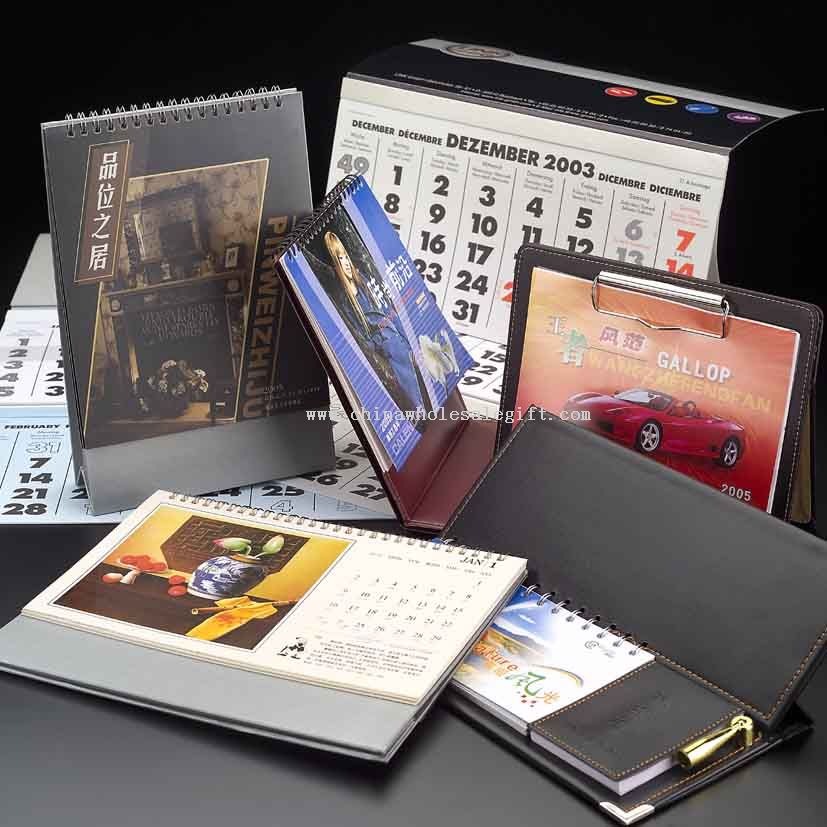
In my lifelong struggle to get and stay organized, calendars have played the part of useful ally, red herring, and saboteur.  


The first function is pretty straightforward.  When calendars do what they are supposed to do, they remind us of appointments.  They help us to avoid overlapping engagements.  They allow us to plan ahead, and to distribute our commitments sensibly.  They are our friends.

The red herring part comes in when I delude myself that the perfect calendar, and worse, the magical combination of several perfect calendars, will somehow cure my procrastination and allow me to achieve my dreams.  My father, had he known about my predilection for wandering through bookstores, office supply stores, and Target's office sections at all times of the year in pursuit of this quarry, would probably have diagnosed OCD.  There is certainly something obsessive about my quest.  

I continue to be drawn, despite years of disappointment, to the offerings of purse calendars, wall calendars, desk calendars and planners.  Color, size, arrangement of days and weeks, and "features" call out to me from the retailers' displays.  I stand as if mesmerized, picking up alternatives and comparing them, as if I were a calendar virgin.  As if someone somewhere might have "discovered" or "invented" my ideal solution since the last time I'd looked.  

I have spent too much time in this chimeric pursuit, time that might otherwise have been devoted to actually doing some of the things I intended to write in these instruments.  I have even been known to switch horses in midstream, changing calendars in September when a particular product seemed "more perfect" than the one I was already using.  And then, of course, obsessively (or is it compulsively?) copying entries from the soon-to-be-abandoned organizational tool into its replacement.  

But worse than this crazy tail-chasing behavior is what happens when I follow the advice of organizational gurus, who recommend keeping several calendars.  I currently have a purse calendar, which I consult when I am away from home and scheduling meetings or appointments; a planner/calendar, which contains my to-do lists and scheduled meetings and appointments; a wall calendar, on which I record my own meetings and appointments and those of other household members; and two computer-based calendars, one personal and one for the organization I help to manage.   My personal computer-based calendar reproduces a daily agenda on my home page, which should theoretically get me where I need to go by putting it in my face each time I open my laptop.  I have decided not to keep a calendar on my cell phone, partly because of its wayward habits of disappearing and running out of charge.

Of course, the gurus would have me synchronize all these calendars.  And that's the crux of my difficulty.  My failure to routinely copy entries from one to the rest of my calendars is what gets me in trouble, producing the third role--calendars as agents saboteur.  I rely on calendars to reality-test my hazy notion of where and when I should be, and behave as if each calendar holds all the necessary information.  This is hardly ever the case.  So when I check the calendar at hand, I am effectively playing calendar roulette.   This week, the game cost me $50 when I missed an appointment and was assessed the no-show fee.  On a good day, my spotty system might relieve me of attending a meeting I wasn't too keen on anyway.

Today, my purse calendar tells me that I am out of time for completing this post, and need to rush out the door to make a late breakfast with a friend, recently and involuntarily disemployed from his job of 31 years.  I leave for tomorrow the task of figuring out what to do about all my calendars.  But I won't stop at Office Depot on my way back.