Nothing is so fatiguing as the eternal hanging on of an uncompleted task. ~William James
Showing posts with label time-wasting. Show all posts

Thursday, July 7, 2011

When All Else Fails, Baby Steps . . .


My first husband was a clinical psychologist.  Still is, actually.  (A clinical psychologist, not my husband.)  One of the movies I remember particularly enjoying with him was What About Bob? with Bill Murray and Richard Dreyfuss.  In the movie, Drefuss's character, Dr. Leo Marvin, is promoting his new book, Baby Steps.  Murray's Bob is in desperate need of its guidance.


While Bob's multiphobic state is beyond anything I have experienced to date in my history of anxieties and mild mood swings, I find the advice--to break the overwhelming down into small, doable steps, and to take those steps one at a time--useful.  In fact, I believe it can be helpful to all of us, from time to time.

And now is one of those times for me. 

I predictably approach life challenges from the library side of things.  When in doubt, I read about the thing that's troubling me.  Thus, this blog and the study that has fueled it. 

My family members frequently chide me to "quit reading about it, and just do it."  Just get on the plane, cry out my grief, clean up the kitchen . . . . And in this case, STOP PROCRASTINATING and DO STUFF.

When I reach the state, as now, where I am floundering, no wind fills my sails, and the task of life looms large, I try to remember baby steps--an antidote to over-delving. 

Today, this translates into:
1) making a to-do list.  I have a love/hate relationship with to-do lists.  I make them too big.  I spend too much time crafting them.  I lose them.  They send me into labor.  But they help anchor me.  And when I have been to-do-less for too long, it helps to go back to the practice of making the list, and referring to it. 

2) employing something I think of as down and up.  This practice consists of making room for frittering and malaise, but interspersing such moments with practical activity.  So I sit down on my backyard swing, reading, dreaming, playing solitaire, for a specified period--a chapter, or 15 minutes, or 5 digital "hands"--and then I get up and load the dishwasher, or fold laundry, or pay the bills, weed the garden, walk the dog, run an errand. . . .  And then repeat as necessary, until the small achievements snag my will and pull me forward.

The challenge with this method is that much of my "productive" stuff happens sitting down, like writing, work-related reading, web design, communicating with clients, working on campaigns, etc.  But when I reach the mental and physical state that harbingers hibernation, physical activity--actual movement, however brief--is required to prevent rusting. 

These are the days for restoring "outer order"--the thing that Gretchen Rubin's maxim promises "contributes to inner calm."

"Baby step, make a to-do list."

"Baby step, sit down and play."

"Baby step, get up and do something."

"Baby step, keep going. . . "

Thursday, February 3, 2011

Out of Steam

I have somehow contracted a serious case of the I-don't-wannas.  All week, I've been refusing to get up early, to get dressed, to get down to work, to attend class, to answer the phone, to deal with emails, to exercise--in short, to tend to much of what usually makes up my life.  And now, I-don't-wanna blog, and I-don't-wanna cook dinner.  And it's my turn.  I know, because I made up the schedule.

I have all sorts of excuses.  I still haven't shaken the dreary cold my grandson gave me a couple of weeks ago.  I attended an exhausting out-of-town training the end of last week, and am still dealing with a free time deficit.  We've been snowed-in the last couple of days.  My grandson is sick again--a new illness--and is disrupting his mother's, and thus my, schedule.  But mostly, if I'm honest, I-just-don't-wanna.

I suspect I have run out of self-control; just like the Heath brothers warned, in Switch.  I'm tired of the grown-up me bossing the profligate me around, judging my time-wasting and focus-lacking self.  It seems I've gone to the "suck-it-up" well once too often lately. 


And if that's my diagnosis, my treatment plan for this acute malady is to go to my minimalist gear.  So for the next few days, I'm going to lay off me, to do the things I pretty much have to, and not much else.  I need to stop ruling myself, before I go on strike for real. 

Tuesday, December 21, 2010

Life Management 101--Indecision, Incompletes, and Insufficient Focus


Chapter 4 of Laura Stack's Find More Time:  How to Get Things Done at Home, Organize Your Life, and Feel Great About It--the current featured resource of our Life Management 101 Tuesdays--is entitled "Mastering the Fourth Pillar--Pests."  Stack's book is organized around her 8 "Pillars of Personal Productivity," which means we are now halfway through our time-finding journey.

In her consideration of "Pests," Stack is referring, not to Wikipedia-defined pests, as in 
an animal which is detrimental to humans or human concerns. . . .  a loosely defined term, often overlapping with the related terms vermin, weeds, parasites and pathogens. In its broadest sense, a pest is a competitor of humanity; 
but rather as
the time-wasters and robbers that keep you from being able to accomplish your goals. . . .the 'termites' that eat away at [the] foundations [of our productivity]. 
So who knew "Pests" would be my second best pillar?  (Which means I'm relatively good at dealing with them, not that I am good at having them.)  Maybe it's because I've had so much practice in this area.  My "Pests" score consisted of the numbers associated with my responses to ten related items within Stack's Productivity Quiz.  (If you're curious about your own productivity scores, the quiz in its entirety can be found on Stack's website.)  I rated each quiz item on the following scale:  1) to no extent; 2) to a little extent; 3) to some extent; 4) to a considerable extent; or 5) to a great extent.  My responses are in red.

To what extent do I . . . 
  • Confront problems head-on and make decisions quickly.  [2]
  • Complete tasks I start; don't let projects stall.  [3]
  • Keep interruptions from wasting my time.  [2]
  • Create shortcuts to get things done quickly.  [2]
  • Combine activities and routines.  [3]
  • Make good use of down time.  [3]
  • Turn off the technology when with my loved ones.  [3]
  • Know and avoid my biggest time wasters and distractions.  [3]
  • Make productive use of driving or commuting time.  [3]
  • Eliminate aggravation and save time when traveling or flying.  [3]
To be honest, I had some difficulty figuring out the classification scheme that led to these issues/behaviors being lumped together in the "Pests" category.  And once again, I did not encounter in Stack's elaborations any suggestions that were new to me.  I am beginning to think that the main value of this book is the opportunity to conduct its assessment, and to take a clear-eyed look at where my stumbling blocks are.  Like, all over the place, apparently.


The author describes herself as having been focused on efficiency and productivity since childhood, when her "Air Force brat" existence had her pulling up stakes every year or so.  She recounts the routines she developed for packing and unpacking, for making an instant home in each new bedroom.  She has taken this life-long learning and turned it into a business.  But while her lists and calendars and control mechanisms may work for her, it is starting to seem a bit too nervous-making for me.  


For example, in Chapter 4, Stack takes care to differentiate "combining tasks" (Good) from multitasking (Bad).  In her view, 
multitasking . . . is switching back and forth quickly from one task to the other.  Combining actually means you are doing two activities at the same time.
In my view, whatever you want to call them, both make it difficult to be in one present moment, both raise my blood pressure, and both lead to exhaustion.


Her list of time-wasting activities includes some of my own worst time-sinks, but also some things I consider extremely important to my overall quality of life.  (I'll let you guess which are which.)
  • Television
  • Hanging out around the refrigerator
  • Lolling through the dailynewspaper
  • Checking e-mail as it comes in
  • Surfing the Net
  • Staying in bed too long
  • Playing with your pet or a neighbor's (!) pet
  • Taking personal phone calls
  • Running for coffee
  • Taking naps
  • Dealing with home deliveries
  • Doing home chores while you should be working
  • Running errands one at a time
  • Reading junk mail
  • Socializing
  • Letting guests overstay their welcome
  • Working in your home office when you should be with your family
  • Scheduling too many personal appointments during work hours
  • Shopping
I did relate to what she had to say about ignoring one's family in favor of technological devices.  But I am particularly sensitized to this issue by an iPhone addict who has very recently (yesterday evening) returned home from a long absence, and who just this morning expected me to share his attention with his little hand-held friend.  (It is not escaping my notice that I am especially enamored of productivity advice that seems to apply more to my husband than to me!)


Halfway through Find More Time, I confess that I still haven't.  But I remain hopeful. 
Next week, Possessions--my lowest-scoring pillar.  Maybe I'll locate some extra hours lurking there. . . 

Thursday, November 11, 2010

Time-Witching


Chris Baty's Time Finder, to be employed in preparation for wading into the Herculean depths of NaNoWriMo (National Novel Writing Month, to the uninitiated), appears to share some DNA with Neil Fiore's "Unschedule."  But food-processed, and with a generous dollop of humor.  


The main difference between the two is that the Time Finder is a post hoc accounting of how we are spending our time. It is supposed to result in the identification of "forgo-able" activities, and blocks of time to go with them that can be freed up to spend on the novels his followers will attempt to churn out in the allotted 30 days of November.  To Baty,
[t]he Time Finder is to novel-planning what the Jaws of Life are to accident scenes.
And here's where it resembles the Unschedule on steroids.
[R]ather than extracting precious things from tight places, the Time Finder does the opposite: It helps wedge large valuables into impossibly small spaces.
After a week of retrospective bedtime jotting of each day's activities and the time they absorbed, our would-be-novelist is ordered to "bust out the highlighters or colored pencils, and go to town," identifying REQUIRED, HIGHLY DESIRED and FORGO-ABLE activities.  The latter will make up our "sacrificial lambs" during "the noveling month."  (I read that gerund, and I can't help hearing echoes of "the wizarding world.")


Baty's examples of the forgo-able include surfing the net, conversing with in-laws ("Sorry, I can't deal with Tom's alcoholism this month.  I'm writing a novel."), yard work and picking up the kids from school every day.  He advises the truly maxed-out among us to wait for another month to learn to work more sensibly, arguing that "If you haven't had a heart attack yet, odds are good you probably won't next month either."


Taken to the extremes required by NaNoWriMo, which Gretchen Rubin refers to as a type of "creativity bootcamp," this time diet is like the "emergency subsistence" basis of food stamp allowances.  The kind of plan that is not meant for long-term use.  But its elements can be adapted to a less stringent approach.  


It is useful, I think, to know what rabbit holes our time is disappearing down.  My Time Finder log for today, for example, would show that I spent nearly two hours, for some irrational reason, attempting to install the Winter Solstice Countdown gadget now occupying a slot in this blog's sidebar.  Not only was that too much time to devote to this less-than-vital achievement, but I'm not too happy with the results, since the only version I had the html expertise to adopt is littered unattractively with ads!  (Let the record show, however, that this exercise did allow me to focus my distress over the return to Standard Time, and the sudden lopping off of an hour of light at the end of my workday.  And to concretize my crossing off of days until things start to improve.  Think of it as my hatch marks on the prison wall of darkness.)


I wrote yesterday of my wistful feelings about having let the NaNoWriMo train leave the station without me this year.  I can, however, extend my vicarious participation in this way.  I am going to use the Time Finder over the next week, and begin to identify my forgo-ables.  Serious yard work went by the way years ago (just ask my neighbors!), but I am pretty sure there is still an activity or two that might be productively replaced.  I don't really have in-laws, but I'll keep digging. . . 

Wednesday, September 8, 2010

Romancing the Clock: In Search of Routine

What is it about routines?  For those of us who are largely self-directed workers, whether at home or in some designated workplace, the absence of routine can be daunting.  Personally, I have fond memories of mornings that began with packing lunches for myself and my kids, breakfasting, showering, dressing, assembling items needed for the day, and leaving the house at a predetermined time to travel to the elementary school where we would all spend the day.  And of days spent teaching college, when bells signaled me to begin and end class, and regularly scheduled meetings and office hours told me where to be and when.  


I am currently floundering in "freedom," not quite sure how to fit the puzzle pieces of my obligations and occupations into the frame of my waking hours.  I am spending too much time deciding what to do, and when to do it.  And in my present transitional emotional state, each decision is an opportunity for reflection and a ruminative, and often fruitless, search for meaning.  I need some structure.


Why, then, is it so difficult to use any one of the dozens of schemes I have learned about for giving form to my daily activities?  As with other resistances that plague me in my quest to get it together, I am partly in flight from myself.  In the past, my attempts to employ routine have been so overdone that I've conjured lists of tasks specified to the point of inanity.  For example, should I need to include a designated time for trimming my nails?  For petting my dog?  Apparently, I have a forest and trees issue.  Cutting to the chase, and staying focused on the big picture are not strengths for me.


Maybe it's all the multitasking I have been influenced to engage in.  Experts such as Dr. David Meyer warn that trying to do more than one thing at a time taxes our brains beyond their two-lobe capacity, decreases efficiency because of time lost in switching between tasks, diminishes focus and can impair short-term memory.  


In any case, I am motivated to try again.  I long for the comfort of some level of prearranged order in my day.  I want to make some decisions once, and not confront them again for awhile.  I crave a bit of predictability.


Here are three resources I have found that I intend to rely on as I construct a workable scaffolding. The first is an article entitled "Time Management Essentials: 13 Routines For Improving Your Life," on Freestyle Mind: Productivity and Life Hacks, which offers a daily, weekly, and monthly set of routines that are basic enough to avoid the nail-trimming, dog-petting trap.  The second is "Organize Your Day With Routines," a little pep talk on BellaOnline:  The Voice of Women, recommending the use of routines for transitional times of the day.  The third is "Daily Routines:  How writers, artists, and other interesting people organize their days."  It begins, intriguingly, with an interview with Simone de Beauvoir, which includes the question "When do you see Sartre?," and de Beauvoir's response, "Every evening and often at lunchtime. I generally work at his place in the afternoon."  This example should be helpful should I need to squeeze regular contact with a famous existentialist novelist into my overall agenda. 

I'll get back to you on what I manage to distill from these and other thoughts on the subject.  In the meantime, I have decided that for today--this being the last day my gym will be open until Saturday because of Rosh Hashana--I need to go swimming.  Right now.

Tuesday, May 25, 2010

Procrastinating 101: No More Pyrotechnics

Chapter 2 in Neil Fiore's The Now Habit:  A Strategic Program for Overcoming Procrastination and Enjoying Guilt-Free Play is entitled "How We Procrastinate."  (Note, it is not "How To Procrastinate," which I would not have needed to read.)


What I took away from reading this chapter consists of two main ideas.  First, it is important to learn about how we delay acting.  In Fiore's words, "Knowing how you procrastinate is even more important than knowing why." [p.36]  And second, "Creating safety [is] the first major step out of procrastination."


In order to discover what we're doing and not doing, which, in Fiore's view, is largely a problem of time management, he would have us begin by doing something that "is easier than anything a book on procrastination has ever asked of you before:  simply procrastinate at your normal level for another week."  I can do that!


Ah, but the rub is that we are instructed to keep an inventory of every activity during our waking time for three days.  He suggests breaking the day into three or four periods--morning, afternoon, and evening, for example--and documenting what we are doing, and for how long.  Within reason, of course.  Not every bathroom trip, sneeze, and momentary mental lapse.  Just the main stuff.  Like "commute, 30 min.;" "lunch and socializing, 75 min.;" "clearing desk, looking for folders, 20 min.;" "breakfast in front of TV, 30 min.;""WORK, LOW PRIORITY--Cs."  He also recommends that we use Alan Lakein's categories (from How to Get Control of Your Time and Your Life) of A (most important), B (important), and C (least important) to characterize our work efforts.  At the end of this three-day observation, we can total the amount of time spent in various types of activity, and divide by three to get a sense of our daily time allocations.  Fiore then directs us to study these "results," and to look for ways to "find" more time for priority activities, by eliminating time-wasters, and combining and rearranging activities to take advantage of higher energy periods.


I am going to try out this method for the next three days--beginning with tomorrow, of course.  (I am, after all, a procrastinator, or I wouldn't be writing this.)  My husband uses a similar approach to weight control--I call it his iPhone diet--in which he records every morsel that goes into his mouth, as well as every period of exercise.  Of course, he has an "app" which calculates calorie intake and expenditure, and tracks his adherence to a prescribed daily ration.  It has helped him to lose ten pounds since I started this blog.  I will be going low-tech, and using a chart created on Dr. Fiore's model, writing in my entries by hand.  And battling my inner child, who dreads this detailed assignment, every step of the way.


Following this truly lark-ish undertaking, I will advance to the next stage, which is a Procrastination Log.  In this jolly little exercise, we are to record (with or without iPhones) each instance of task-avoidance, noting date and time; activity and priority; thoughts and feelings; justification; attempted solution; and resultant thoughts and feelings.  One sample entry he gives is 
2/7 10:00 A.M.| Screen door, B| Can't I rest on Saturday?| Overburdened| Watched TV| Guilty; blamed self for laziness; fear wife's anger
After a few days of keeping this log, the next step is to look for patterns.  This appeals to the unemployed qualitative researcher in me, and should reward my nose-to-the-grindstone log-keeping.  I can't wait to see what I'm up to!


Finally, Fiore spends several pages describing the mechanism by which many of us employ procrastination to manage anxiety--thereby, ironically, increasing anxiety.  Using the metaphor of being asked to walk across a 30 ft. long, 4 in. thick, 1 ft. wide board, he shows how the perception of safety--in response to changing stakes--affects our ability to perform. In the first scenario, the board is placed on the ground.  In the second, it is suspended between two buildings 100 feet off the ground.  In the third, the building on the end of the board that we are clinging to is engulfed in flames.  And in the fourth, a safety net is provided, three feet below the board.


Fiore tells us that our perfectionism and "performance is worth" belief raise the board.  By procrastinating, we light the fire behind us, and lower expectations for our performance.  (It's okay to crawl across on your belly, or do whatever degrading thing you need to, to escape the fire and reach the goal of the other building.)  And he suggests that we can create the safety net by chipping away at the mistaken belief that perfect performance of the task is a matter of life and death, and represents our value as a human being.  


I agree that safety and self-worth are at the heart of procrastination recovery for me.  And I probably won't miss the adrenaline that has fueled so many races to the finish line, pursued by one impending disaster after another.  If I can just figure out how to tame my inner arsonist.  Stay tuned.

Tuesday, April 20, 2010

Procrastinating 101: My Laptop Made Me (Not) Do It!


Remember Piers Steel?  Associate professor of industrial psychology at the University of Calgary who brought us a formula to explain procrastination?  Well, Professor Steel's research warns that procrastination is increasing in our society:
In 1978, only about 5% of the American public thought of themselves as chronic procrastinators. Now it's 26%. . .
And
in the past quarter century the average self-score for procrastination (using a 1-to-5 scale with 1 being no delaying) has increased by 39%. 
And 
At least 95 percent of people say they procrastinate occasionally.


Several media sources that reported on Steel's research in January of 2007 passed on the admonition that procrastinating would make us "poorer, fatter and unhappier."  Other procrastination experts who commented on the five-year-late release of Steel's mega-study agreed about the seriousness of the problem, and its entrenchment in our culture.  Dr. William Knaus said that his work with procrastinators was more challenging than getting alcoholics to give up booze.  And Dr. Joseph Ferrari of DePaul University in Chicago said
The subject is seen as a joke.  But the social and economic implications are huge. These people need therapy. They need to change the way they act and think.


And here's the kicker. Many of the scientists studying the kind of behavior they associate with such dire personal and societal consequences blame technology for its increase. They point out that we have more and more access to gadgets and toys, including cell phones and computers--and now the alluring iPad--that seduce us away from the odious tasks at hand. Professor Steel refers to one popular cell phone/PDA as "crackberry," and says
That stupid game Minesweeper— that probably has cost billions of dollars for the whole society.
(As Steel is a self-professed mostly recovered procrastinator, this statement may reflect some personal experience.)   A 2008 article in the Guardian makes the claim that  
Even the beeps notifying the arrival of email are said to be causing a 0.5 per cent drop in gross domestic product in the United States, costing the economy $70bn a year.


Professor Paul Spector of the University of South Florida has categorized three ways we stray from the path of righteous task completion.  The first, which he calls classic procrastination, involves difficulty getting started.  The second, the province of the perfectionist, is one I know all too well--getting bogged down in details and failing to finish what we've started.  Spector's third group of procrastinators he calls "distractible"--and it is here that technology's increasing temptation-value rears its ugly head.


Steel again:
The internet and gadgets. . .give people a constant source of putting things off, and they create motivationally toxic environments.  Imagine trying to diet with a magic floating spoon of ice cream following you around.

The gist of all this, as I see it, is "Procrastinators of the world, unplug!" Go offline. Create a toy-free zone for work. Not the whole solution, but for some of us, probably a necessary step. And a conundrum for this procrastination blogger.

Friday, April 9, 2010

Procrastination Rituals of the Not-so-Rich and Not-so-Famous

As part of their special issue on procrastination, Slate Magazine published an article on "the procrastination rituals of everyone from cattle ranchers to CIA agents."  Embedded in this important reference work is an alphabetized interactive list of occupations which allows the enterprising reader to "mouse over" a category of interest and learn about a corresponding procrastination ritual.  For example, if you were wondering how a Major League Baseball bat boy might waste time, you could be enlightened by this entry:
Bat boy (MLB) 
Henry Freedman
Houston, Texas
"The ballpark is the best place in the world to procrastinate. You’ve got a huge stadium to play with. We’d play catch on the field, all kinds of stuff. Play any sort of game you can come up with—pretending to throw balls at the crowd. We’d do a lot of things involving sunflower seeds, spitting them, flicking them, trying to kick gum all the way from the dugout to the field. ... We had one batboy who used to sneak out to the bullpen to nap. Sometimes we brought the relievers beer out there.”
Or you could look up poet, and find that Christopher Kennedy of Syracuse, N.Y., confesses that
“I spend an inordinate amount of time selecting the song for my MySpace page. It’s really just set up for my books, but I get obsessed with showing my stellar taste in music across the decades. It’s probably really annoying to anyone who has to get an update every time I make a change to my page. …You take someone like Shakespeare—if he was writing with a computer, we’d be lucky to have four or five sonnets and maybe one play.” 
Scrolling through the list, I found I had to know how a geomancer blows off his or her responsibilities.  I had no clue what a geomancer is or does, and Ivan McBeth of Dreamland, Vt. didn't help me out much.
“Part of our training is just to sit and distill our thoughts by gazing at things. Procrastinating is one of the things we try to be aware of. And not to do. I don’t really procrastinate.”  
In fact, his was one of several claims included in this handy little catalog that would have us believe that the individual didn't or couldn't or wouldn't dream of trying to procrastinate.  In this group were air traffic controller (thank God!), astronaut, funeral director, otolaryngologist, and psychic. 


While others were perhaps more forthcoming, the range of responses led me to speculate about the specificity and uniformity of the question(s) that elicited them.  The article begins with this introduction:  
We already know plenty about how college students and office workers waste time: They check e-mail, send Facebook status updates, and—ahem—read online magazines. But what does procrastination look like for everyone else? 
The handy dandy little compendium itself follows this:  "We asked people from all walks of life to describe their procrastination rituals." 


I thought the inquiry was fascinating, and the results entertaining if not exhaustive.  So I decided to do a little research of my own.  Following their not-so-precisely described "procedure," I asked a small "random sample" of individuals, all related to me in one way or another, what they did when they were procrastinating.  Here are my additions to the "literature" on procrastination rituals.

College Student--I spend lots of time on the internet, and play games on my phone.

Federal Employee--I shop!


Psychologist--Training a squirrel (operant conditioning and shaping) instead of writing my dissertation

Schoolteacher and Mom--I clean stuff instead of doing what I'm supposed to do.

Student in On-line Program--Watching YouTube videos, comedy performances and sit-coms; checking sports scores and forums

University Professor--I'm procrastinating about doing a video for class. I can't make myself do it. It's creative, it takes psychic energy. I tried to do a lot of reading, enjoyment, prepare myself by reading, don't concentrate on it, get myself ready to jump into it, put it off and put it off, rest up for a huge expenditure of energy. I do things that are more enjoyable, biding my time before I've got to jump in.


Unnamed Blogger--[disingenuously] I can't really afford to procrastinate.  The demands of the job are too great.  And I don't spend much time on the internet so I don't have that temptation.  I'm really above all that time-wasting stuff.  [Yeah, right!]

Friday, April 2, 2010

Calendars, Calendars, Calendars


In my lifelong struggle to get and stay organized, calendars have played the part of useful ally, red herring, and saboteur.  


The first function is pretty straightforward.  When calendars do what they are supposed to do, they remind us of appointments.  They help us to avoid overlapping engagements.  They allow us to plan ahead, and to distribute our commitments sensibly.  They are our friends.

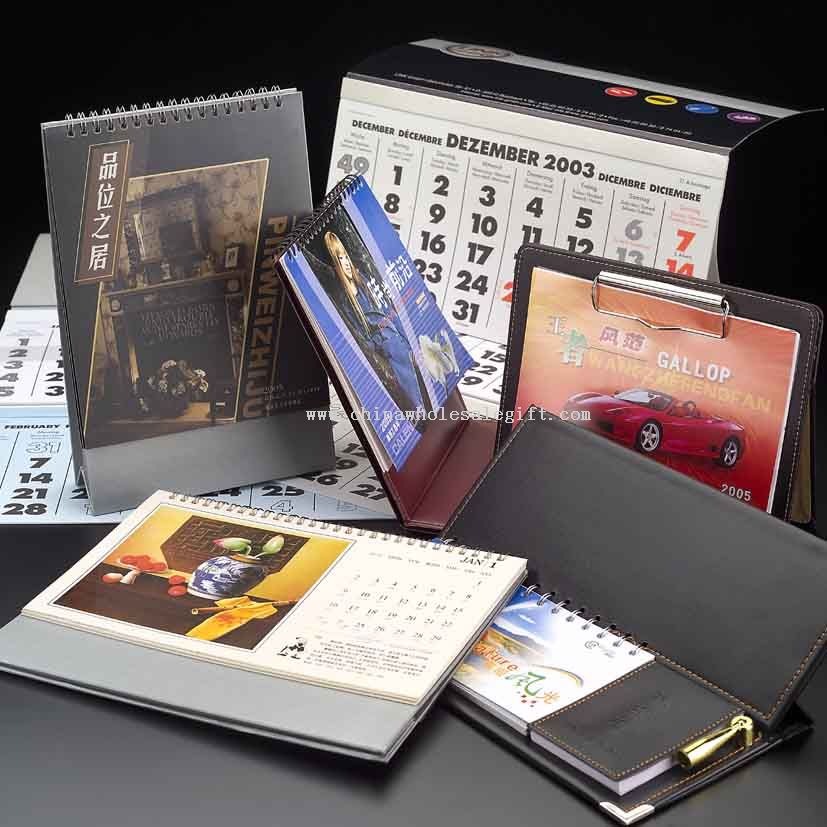
The red herring part comes in when I delude myself that the perfect calendar, and worse, the magical combination of several perfect calendars, will somehow cure my procrastination and allow me to achieve my dreams.  My father, had he known about my predilection for wandering through bookstores, office supply stores, and Target's office sections at all times of the year in pursuit of this quarry, would probably have diagnosed OCD.  There is certainly something obsessive about my quest.  

I continue to be drawn, despite years of disappointment, to the offerings of purse calendars, wall calendars, desk calendars and planners.  Color, size, arrangement of days and weeks, and "features" call out to me from the retailers' displays.  I stand as if mesmerized, picking up alternatives and comparing them, as if I were a calendar virgin.  As if someone somewhere might have "discovered" or "invented" my ideal solution since the last time I'd looked.  

I have spent too much time in this chimeric pursuit, time that might otherwise have been devoted to actually doing some of the things I intended to write in these instruments.  I have even been known to switch horses in midstream, changing calendars in September when a particular product seemed "more perfect" than the one I was already using.  And then, of course, obsessively (or is it compulsively?) copying entries from the soon-to-be-abandoned organizational tool into its replacement.  

But worse than this crazy tail-chasing behavior is what happens when I follow the advice of organizational gurus, who recommend keeping several calendars.  I currently have a purse calendar, which I consult when I am away from home and scheduling meetings or appointments; a planner/calendar, which contains my to-do lists and scheduled meetings and appointments; a wall calendar, on which I record my own meetings and appointments and those of other household members; and two computer-based calendars, one personal and one for the organization I help to manage.   My personal computer-based calendar reproduces a daily agenda on my home page, which should theoretically get me where I need to go by putting it in my face each time I open my laptop.  I have decided not to keep a calendar on my cell phone, partly because of its wayward habits of disappearing and running out of charge.

Of course, the gurus would have me synchronize all these calendars.  And that's the crux of my difficulty.  My failure to routinely copy entries from one to the rest of my calendars is what gets me in trouble, producing the third role--calendars as agents saboteur.  I rely on calendars to reality-test my hazy notion of where and when I should be, and behave as if each calendar holds all the necessary information.  This is hardly ever the case.  So when I check the calendar at hand, I am effectively playing calendar roulette.   This week, the game cost me $50 when I missed an appointment and was assessed the no-show fee.  On a good day, my spotty system might relieve me of attending a meeting I wasn't too keen on anyway.

Today, my purse calendar tells me that I am out of time for completing this post, and need to rush out the door to make a late breakfast with a friend, recently and involuntarily disemployed from his job of 31 years.  I leave for tomorrow the task of figuring out what to do about all my calendars.  But I won't stop at Office Depot on my way back.  

Monday, March 29, 2010

Done for the Week: Here We Go Again


This morning I awoke in my own bed, next to my own husband--after three weeks of sleeping in my study due to night time coughing and concerns of contagion. I awoke unsummoned by the alarm I had diligently set last night, almost a full hour later than I planned to--and needed to--get up. I think I've found the last clock in the house still on standard time. 

So now I'm late before I've even started.  A frustrating way to begin the week.  Lately, the number of days that I have to become conscious and (somewhat) literate at the crack of dawn in order to squeeze this blog in before scheduled meetings and appointments has been growing.  This won't be the last time this week, nor the second last, nor the third, that I am "on the clock" as soon as my feet hit the floor.

In a related move, I've decided to tweak this "done list" post this morning, by adding the identification of a goal for the coming week.  And this week's goal is to meditate 5 times.  By going public with this intention, I hope to ratchet up my attention to this need, and to make finding/taking time to sit on my cushion a higher priority.

Last week, all my rushing around resulted in the following.

Done List--Week of Mar. 22-Mar. 28
  1. Finished The Procrastinator's Handbook:  Mastering the Art of Doing It Now, by Rita Emmett; The Big Squeeze:  Tough Times for the American Worker, by Steven Greenhouse
  2. Took my blood pressure daily
  3. Investigated a new, and ultimately unsatisfactory dog exercise area with my dog
  4. Attended 4 meetings; scheduled 2 more
  5. Published 5 blog posts
  6. Meditated 1 time
  7. Celebrated happy hour with my not-so-happy spouse
  8. Was treated to dinner and the ballet by a friend; had a wonderful time
  9. Spent an inordinate number of volunteer hours on major work project for nonprofit 
  10. Participated in national conversation with Big Squeeze author Steven Greenhouse, sponsored by the Unitarian Universalist Service Committee
  11. Parented one teenager through another post-midnight mini-crisis
  12. Helped heroic husband assemble data to complete our tax filing
  13. Provided 15 hours of child care to two-year-old grandson
  14. Spent time I could have spent meditating on Bejeweled Blitz; had highest score of my friend group
  15. Slogged through the house I didn't have time to clean to accomplish the above
Next week, I hope to grow item 6, and shrink 14. For now, I'm off to an interview and two meetings.

Wednesday, March 10, 2010

Solitaire--More Than You Probably Wanted to Know

1:30 a.m.  Two days after my daughter's wedding.  My father gets up to use the partially painted bathroom, tries to steady himself on the stepladder I've neglected to remove, and crashes through the glass divider next to the toilet.  My mother summons me to the scene.  His arm is streaming blood.  "I just need a band-aid," pronounces the man who has performed hundreds of appendectomies, though none recently.  


Four hours and nineteen stitches later, we return from the emergency room to find my mother losing at solitaire.  She was concerned for my father, but almost as distressed at her unusual bad luck with Klondike.  On a hunch, I counted the cards.  Fifty-one.  She had been, literally "not playing with a full deck."  For Christmas that year, I gave her a shiny new pack of Bicycle playing cards.  And some other nice stuff, too, of course.


The very same father, in the hay days of his small town medical practice, would periodically slump into depression, signaled by days spent in his bathrobe at the kitchen table, playing solitaire.  Minus the bathrobe and the kitchen table, I took this habit to college with me.  When cramming for exams, last-minute paper-writing, and quasi-virginal sex weren't keeping me up, the wee hours were for solitaire.  Hunched over the cards on my dorm room floor, I would play until my back ached and my eyes were bleary.  


With the digitalization of everything came computer solitaire.  I, too, was seduced by the come-on of the cascading cards, the audio of applause so rare in my regular hours.  And I caved, too, under the onslaught of ever-new versions of this daddy-of-all-time-wasters.  Still hunched, but now over a laptop screen, I have played until my back ached, my eyes were bleary, and I began to develop carpal tunnel syndrome.


Computer solitaire has become the dirty little secret of millions of us, especially in the workplace.  One Mahjong solitaire program I've seen has a built-in "Boss Key" that 
[h]elp you quick hide the game when your boss coming in. Press the Space, the game will disappear from your screen, and press Space again, it can turn up.  
Such a feature might have helped Edward Greenwood IX, famously fired in 2006 from his job as a state lobbyist for the city of New York by Mayor Bloomberg, who caught Greenwood playing solitaire "on city time."   No notice, no severance pay, and the end of six years of cushy public employment at a non-Bloomberg salary of $27,000.  For playing solitaire.  In point of fact, Greenwood was not at his desk, or even in the office when his offense was detected, but away on city business.  Bloomberg Law professor and blogger Ann Althouse's post on the Greenwood affair prompted these comments:


Goesh said...
Hmmm - one would think some less harsh disciplinary action would be in order first, like a written reprimand and warning, possibly a day or two suspended without pay. What's next, doodlers? I wonder what his employee evaluations were like? I got a crisp $20 says he was doing satisfactory work. This won't garnish him many votes from government workers, that's for sure.

Freeman Hunt said...

That's pretty harsh. If we fired all the employees who we ever saw playing solitaire, I think we'd be left with only the warehouse staff because they don't have desks and computers. 

Clearly, if we're starting to jeopardize employment here, it's time to talk about addiction--something we seem to be addicted to talking about anyway, what with the sex addictions, shopping addictions, exercise addictions, etc.  And rest assured, this one hasn't escaped the attention of addictionologists.  The conversation has even trickled down to the Nickelodeon set, who have spawned a handy-dandy, if misspelled,  little
quiz we can take, to assess our problem.  Or we can check the following, from a solitaire game site  :

Here's a shortlist of solitaire addiction signs you can use to make sure you or someone you love isn't becoming a solitaire addict:
  • Getting an excited or "rushing" feeling when playing Solitaire
  • Feeling guilty about playing Solitaire but continuing to play
  • Not being in control of the amount of time spent on playing solitaire
  • Lying about the amount of time you spend playing solitaire, thinking about solitaire, or even dreaming about the game
  • Playing solitaire to deal with feelings of sadness or anxiety
  • Becoming angry when your "real life" interrupts your solitaire time
There are also a handful of physical signs that solitaire addiction could be present. These include the onset of carpal tunnel syndrome, dry bleary eyes from staring at the computer screen, recurring headaches and back pain, trouble eating, and ignoring personal hygiene.
Wheeewww!  I'm not addicted.  I never dream about solitaire, I eat regularly and with no difficulty, and I am not ignoring personal hygiene.   And thank goodness, I don't have anything remotely resembling a "workplace."


In defense of solitaire, a cause to which legions have risen in the wake of all the faint praise, some refer to it as a meditative activity.  Others claim beneficial effects including time-saving, since solitaire breaks are taken at one's desk, unlike coffee breaks which are often taken elsewhere, and lead to bathroom breaks; some kind of mystical mind-meld thing where higher order problems get solved while the brain is busied with low-level card manipulation; brain stimulation in playing of more complicated games, which can stave off Alzheimer's; and anxiety-reduction. 


Josh Levin's 2008 Slate Magazine piece (in their special edition on procrastination), entitled "Solitaire-y Confinement: Why we can't stop playing a computerized card game," is a useful compendium, part history, part analysis, part light-hearted examination. He makes the point that solitaire put-downs have become a throwaway barb because so many of us hide this part of our lives.  And he admits that he struggled to quit playing solitaire long enough to write the article.  He credits our common preoccupation with the advancement of computer familiarity and usage, and pacification in the modern office.


I have often wondered, in between games, what I might have gotten accomplished had half of the hours I've spent on these games, once dubbed "patience," and also referred to as "kabal," been spent more productively.  What might we as a society have achieved?  It boggles the mind.  Although, if I get to count those hours as meditation time, I'm already Buddha!  From a long, proud line of Buddhas.